The first thing you notice is that water in the shower doesn’t go down like it used to. Later, your sink starts gurgling. Then, you smell… something.
Before long, you’re staring at a suspicious puddle in your garden and typing the only thing you can think of into Google: “honeysucker septic tank near me.”
You’re not even sure what a honeysucker is. A person? Beekeeping equipment? Isn’t there a bird by that name…?
Don’t worry, you’re not alone. Lots of people use that phrase when something goes wrong with their drainage. The good news? You’re in the right place.
Let’s break down what a honeysucker actually is, how it works with your septic tank, and when to call one in (ideally before your shower turns into a swamp).

Understanding the Honeysucker Truck and Septic Tank System
Your septic tank is an underground container that collects all the wastewater from your home’s toilets, showers, sinks, and drains. Over time, the sludge and scum build up and must be removed. If not, the tank can overflow or back up into your home.
That’s where the honeysucker comes in…
A honeysucker is a large vacuum truck that we use to safely remove waste from septic tanks, grease traps, and conservancy tanks. They have a high-powered suction hose to extract liquid and solid waste into a secure onboard tank.
Your septic tank is an underground container that collects all the wastewater from your home’s toilets, showers, sinks, and drains. Over time, the sludge and scum build up and must be removed. If not, the tank can overflow or back up into your home.
That’s where the honeysucker comes in…
A honeysucker is a large vacuum truck that we use to safely remove waste from septic tanks, grease traps, and conservancy tanks. They have a high-powered suction hose to extract liquid and solid waste into a secure onboard tank.
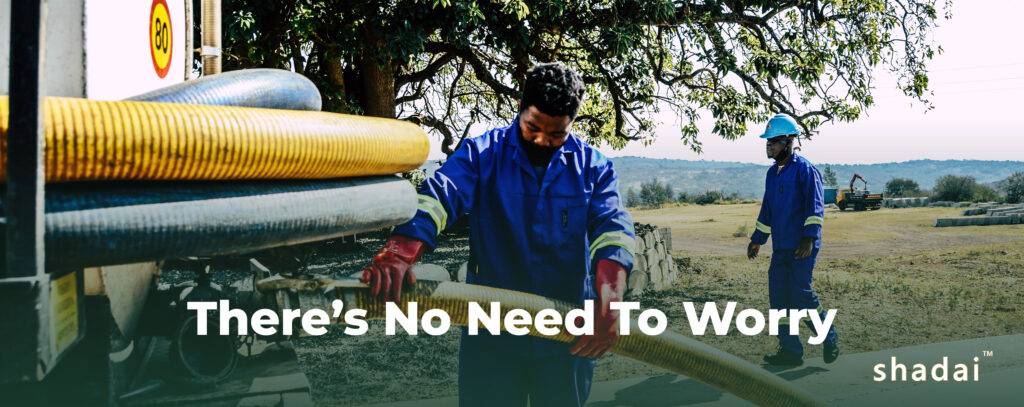
There’s No Need to Worry
While this sounds messy, our honeysucker trucks are operated by professionals who are trained to:
- Open the septic tank safely
- Remove all sludge and wastewater
- Ensure nothing contaminates surrounding soil or water
- Transport the waste to an approved disposal site
This process is an essential part of septic tank maintenance and environmental protection (and not allowing your shower to become a bath).
For most homes, septic tank emptying is needed every 2 to 4 years. Commercial sites or high-usage homes may require more frequent servicing.

How to Book a Honeysucker Service in Durban
If you’re based in Durban, Upper Highway, or surrounding areas, Shadai SA offers reliable, and environmentally responsible honeysucker services.
We operate with trained teams, Spill Tech emergency kits on board, and full waste disposal compliance, because we believe in getting the job done right.
Contact us for more information, or a quote on your septic tank service today!